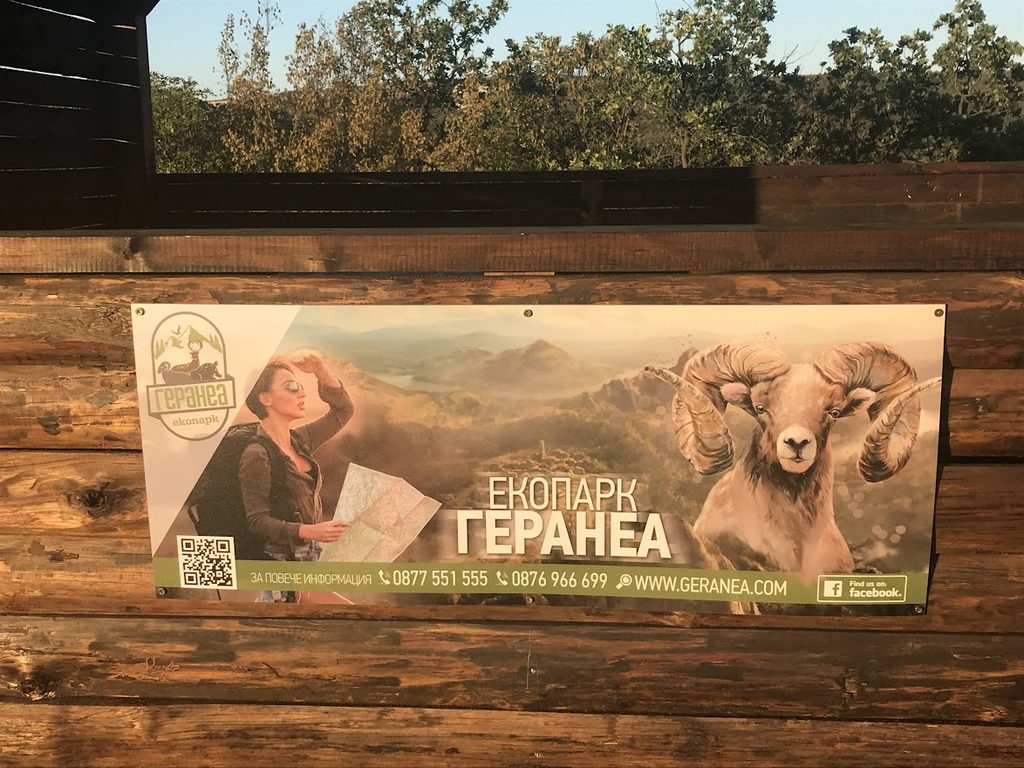
Just 5 kilometres from the resort of Albena and 17 from Balchik, in the triangle between the villages of Obrochishte, Tsarkva and Lyakhovo, another tourist attraction is appealing visitors. Unlike the all-inclusive entertainment in modern resorts, it has almost no contact with civilization. But there are 7,300 acres of forests and meadows where wild boars and horses, roe deer and fallow deer, mouflons and Cameroonian goats roam free. A veritable kingdom of wildlife. And it’s not a hunting lodge, it’s an eco-park – the Geranea Ecopark.
Geranium – geranium from Latin, gives the name to this extraordinary place. A place of health, with a special climate that is mild even in winter. Warm currents from the sea protect it from the harsh frosts and that is why it is like eternal spring here. They also preserve the rich vegetation and the hundreds of wild animals that roam free in the park, framed by 16.5 kilometres of sturdy fence.
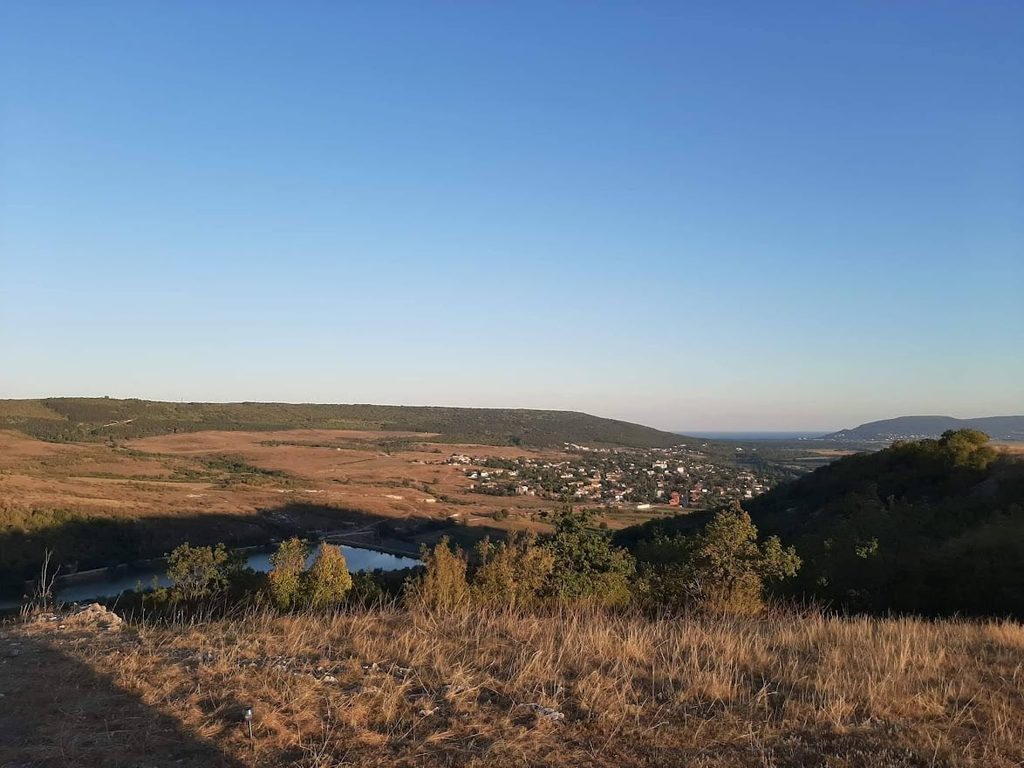
The Valley of Health starts from the sea, and part of it is this natural wonder, with severely rugged terrain in places, not a metre of tarmac, with a dam and micro-dams which mouflon, fallow deer, roe deer, wild goats and pigs, rabbits and all manner of feathered inhabit. No cars are allowed here, no hunting, the only amenities for the brave climbers on the steep are wooden benches with tables for relaxation.
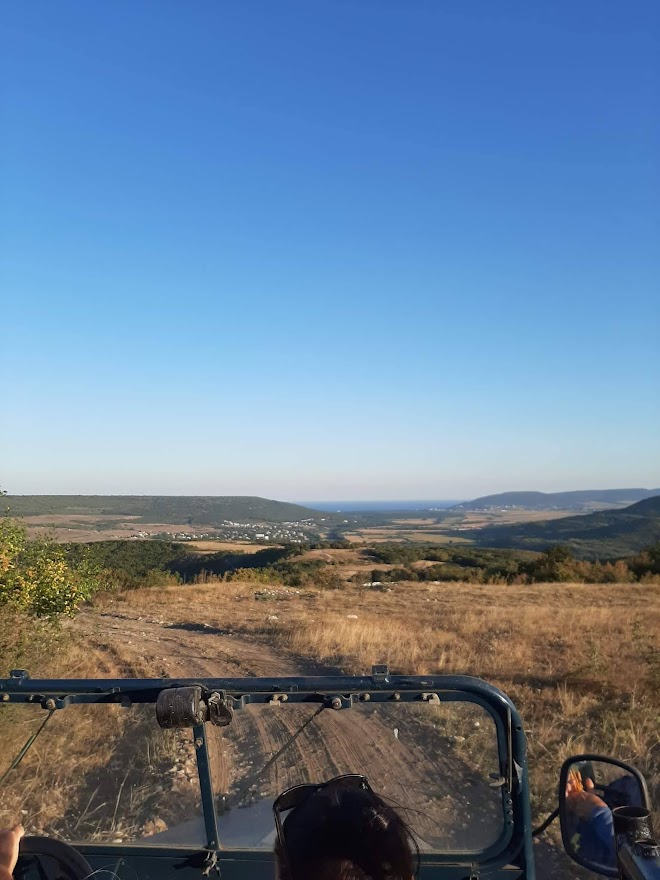
Seven lookouts allow nature-loving visitors to observe the animals without getting in the way. For now, only during daylight hours – with binoculars or the naked eye. Soon, however, the eco-park will be equipped with thermal cameras so that guests can enjoy the wildlife at night, when the inhabitants of Geranea feel at ease under the cover of darkness.
The best time to observe is early in the morning or late in the evening, when the heat is not bothering the animals and they are in groups eating or drinking water.
Bare in mind these pictures have been taken in August, when the heat is enormous and everything is dried.
A bonus is the next special stop: at the wild pigs, who “waddle” with all their might in the dust of their territory. They are separated by another fence from the rest of the inhabitants because they are quite rambunctious. They have their own cornfield and their own micro-dam, in the lowlands – where they go down to drink water and rub themselves free in the mud. As well as the four herds of huge boar guides and a bunch of little bristly piglets, there are also wild boars roaming the eco-park, the hosts explain. The sight of the herd, in which no one stops for a moment, is respectable.
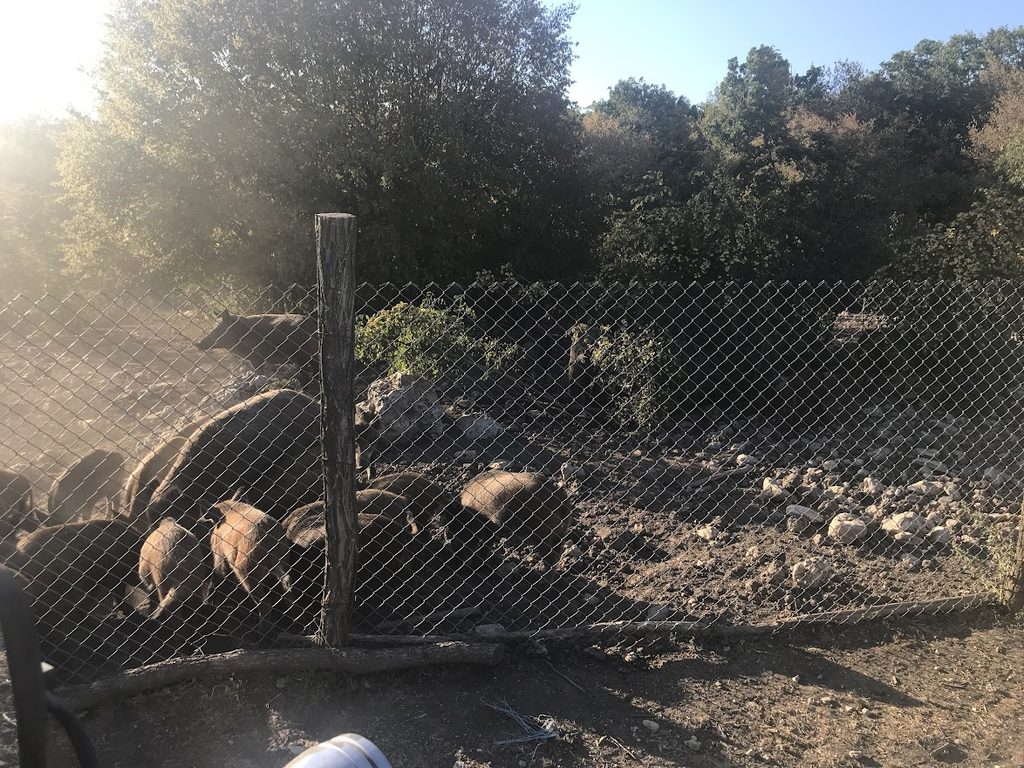
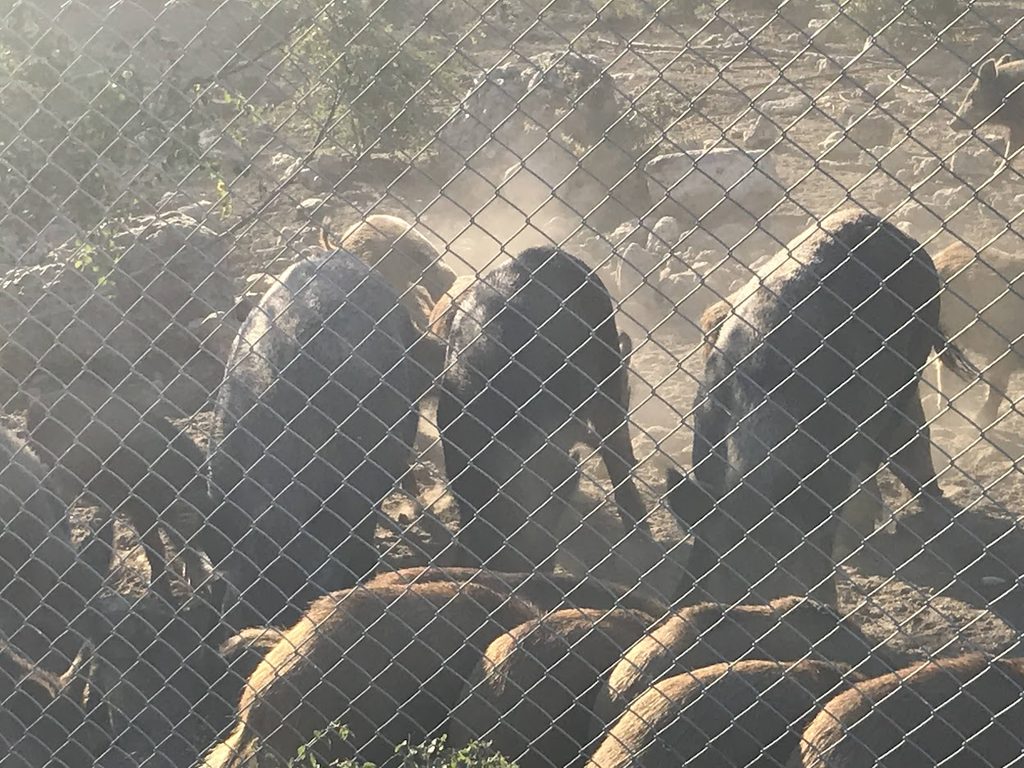
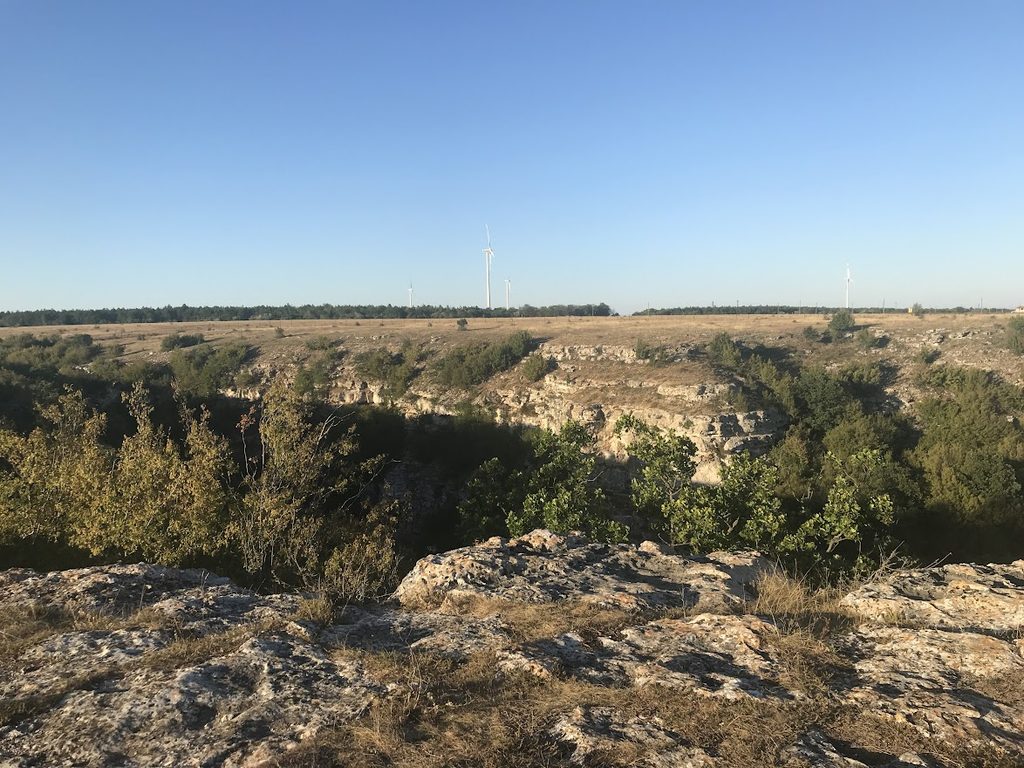
A little later, another surprise awaits us. On the plateau, at the highest part of the park by the wind turbine blades, as we admire the expanse, a herd of horses emerges from the brambles and slowly makes its way towards us.
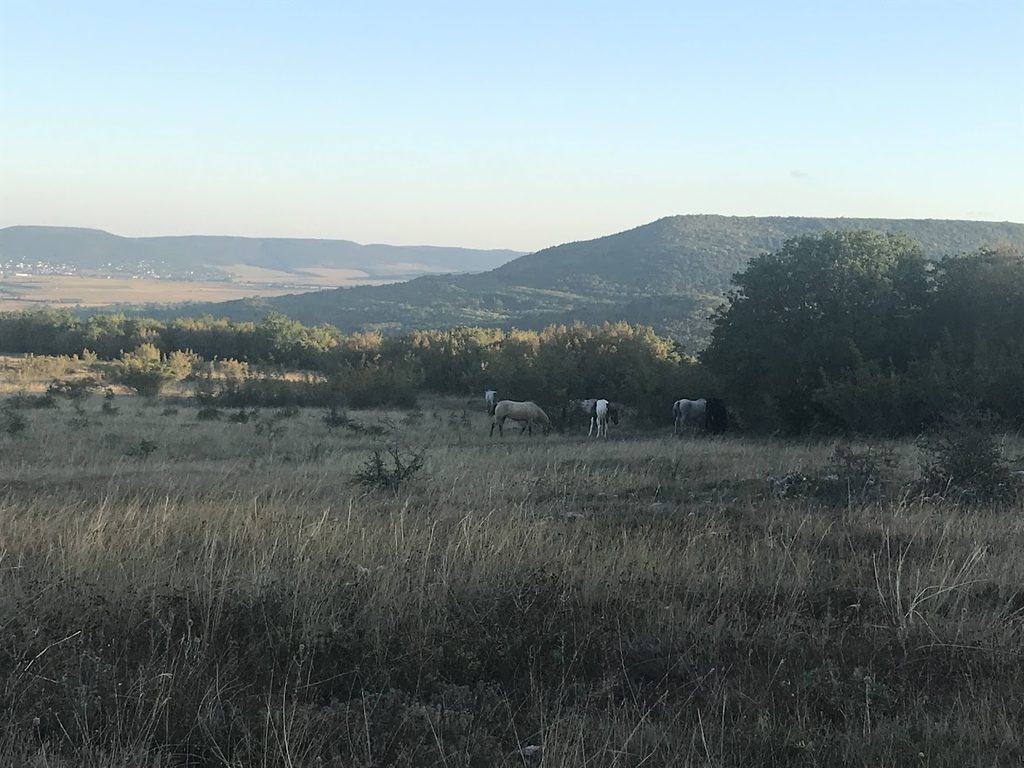
They also have a “wild” friendly company – from time to time deer and roe deer come out of the bushes, calmly walking in the meadow waiting to get bread or other treats from the owners or visitors. While we are looking at the feathered kingdom, a small shoveler – Dancho – arrives from the forest. He walks lazily in the midday heat.
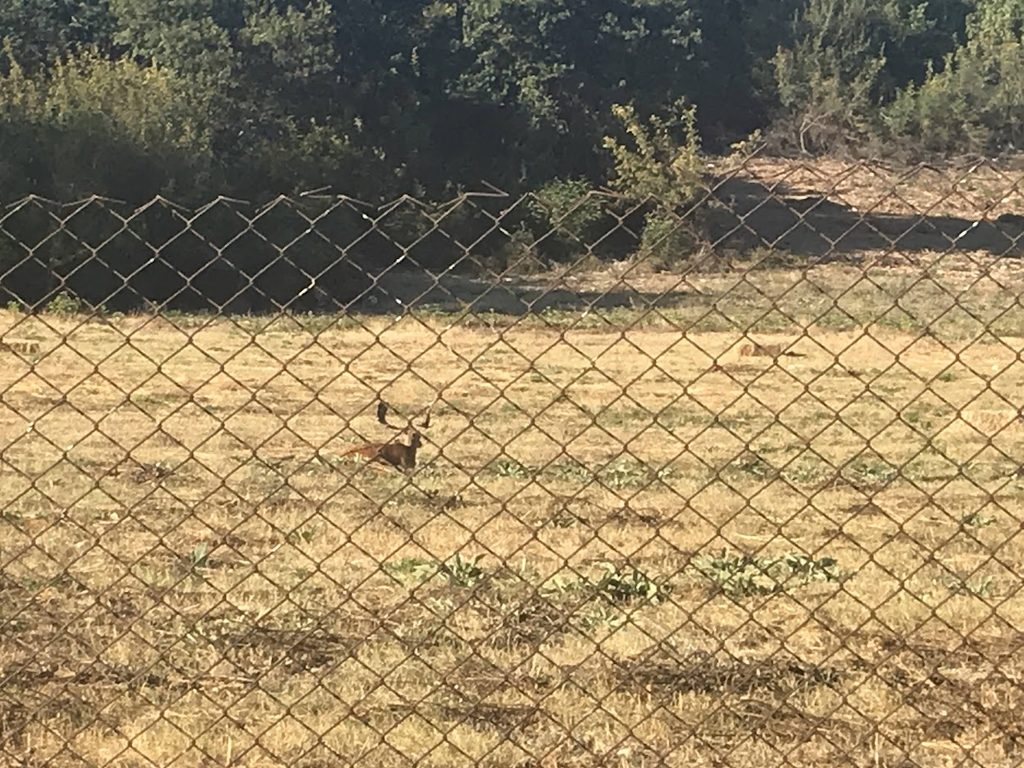
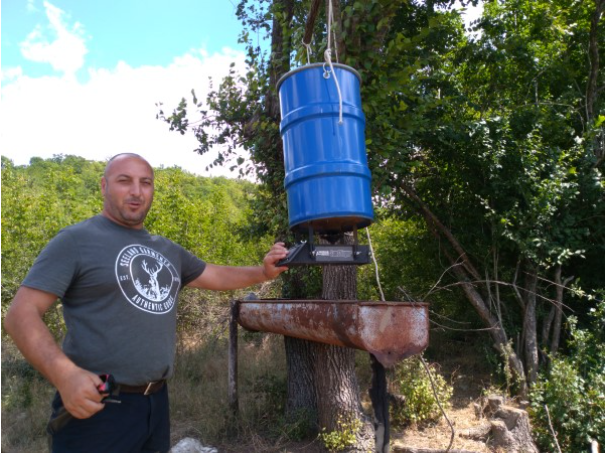
All of the park’s plantings – 190 acres of corn fields and another 70 acres planted in alfalfa and grass mixes with 14 species of herbs – are for the animals. They choose their own menus and times for breakfast, lunch and dinner, like an all-inclusive. Well, in winter, the owners have to come to the rescue with the food – but again without human presence. Because the feeders are “smart” – they are equipped with photocells and can be programmed to drop food 16 times a day.
What is the background of this wild oasis?
Back in 1986, a game farm was built on the territory of today’s Geranea Ecological Park for intensive breeding of mouflon and fallow deer to be displaced to all parts of the country. After 1998, when they began to lease it out, the farm was converted into a hunting farm. More than one and two party bigwigs have come here to shoot game, said Rehjan Nizam, whose team started managing the park two years ago, also on concession. Then they decided to stop hunting.
The new concessionaires’ idea of selecting game, improving the quality of the populations and sending some of their wild animals to other similar farms is already bearing fruit. The fact is the successful partnership with the game farms Iskar and Studen Kladenets, and the Dobrudja businessmen Alexiev brothers have gratuitously replenished the “animal fund” with several shovelers. Water, food, protection, lots of attention and love – all this is a job well done over the last two years. Today, 90% of the wild animals in the eco-park can survive without human presence.